I led design strategy and execution for Guardium Insights' AI Ticket Reconciliation feature, transforming a heavily manual SOX compliance workflow into an automated, AI-powered experience.
The solution supports IBM's broader initiative to automate compliance, auditing, and reporting—helping compliance analysts reduce manual effort, improve accuracy, and focus on higher-value work.
Data security analysts spend an average of 3 hours per day performing manual tasks across multiple tools to validate unauthorized data changes for SOX compliance.
With 4,300 publicly traded U.S. companies subject to SOX compliance, automating ticket reconciliation represents a $3B platform opportunity—reducing systemic compliance risk, driving operational leverage at scale, and positioning Guardium as a differentiated, AI-first enterprise solution.
Publicly traded U.S. companies require SOX compliance
Market opportunity for IBM
Competitor solutions still rely heavily on manual workflows
I partnered with stakeholders, SMEs, and customers to deeply understand the reconciliation workflow.
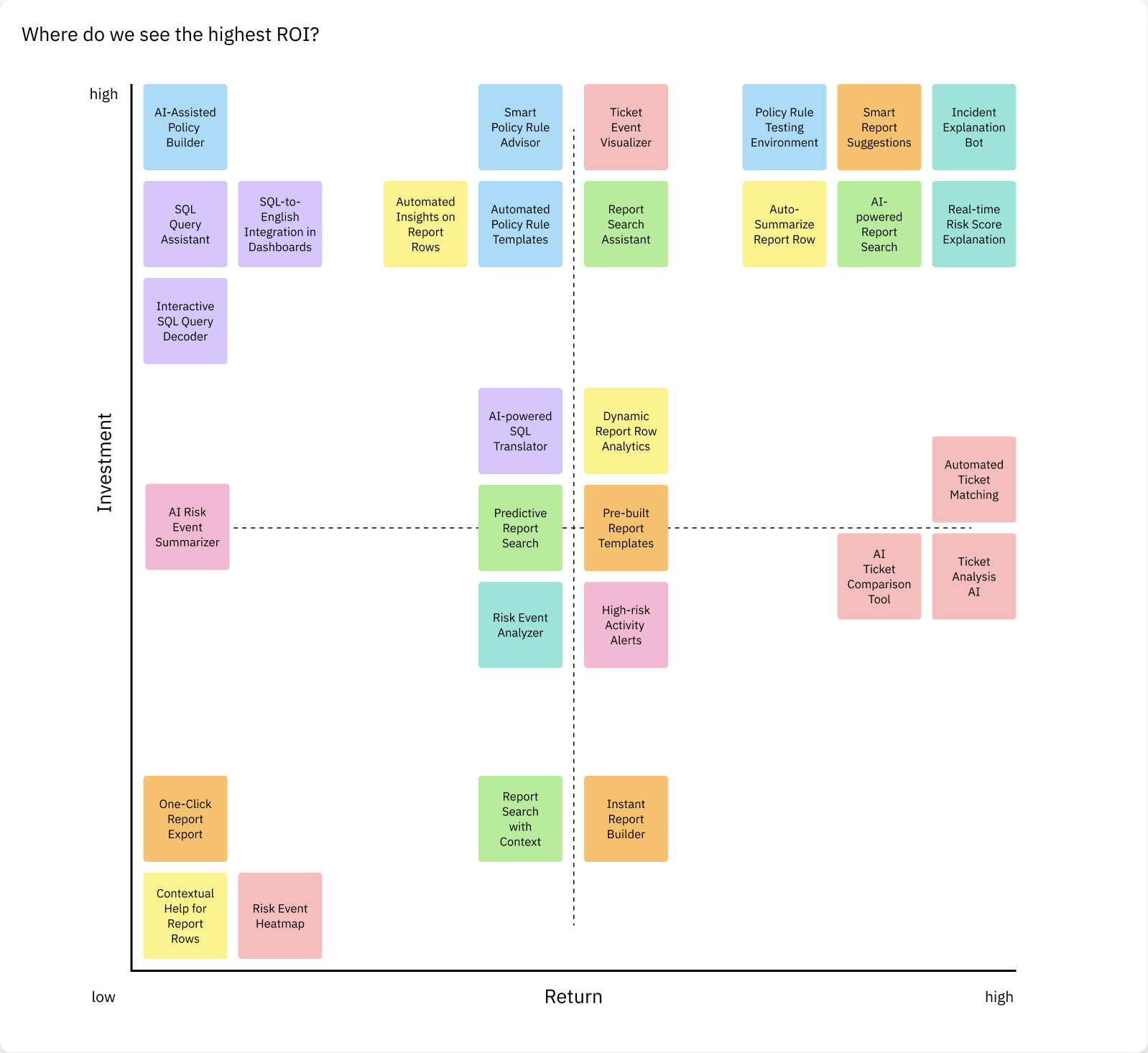
How might we automate SOX ticket reconciliation to reduce manual effort, minimize errors, and improve analyst confidence—without removing human oversight?
I designed an AI-powered reconciliation experience using IBM’s Watsonx, embedded directly within existing compliance workflows to automate reconciliation without disrupting established audit processes.
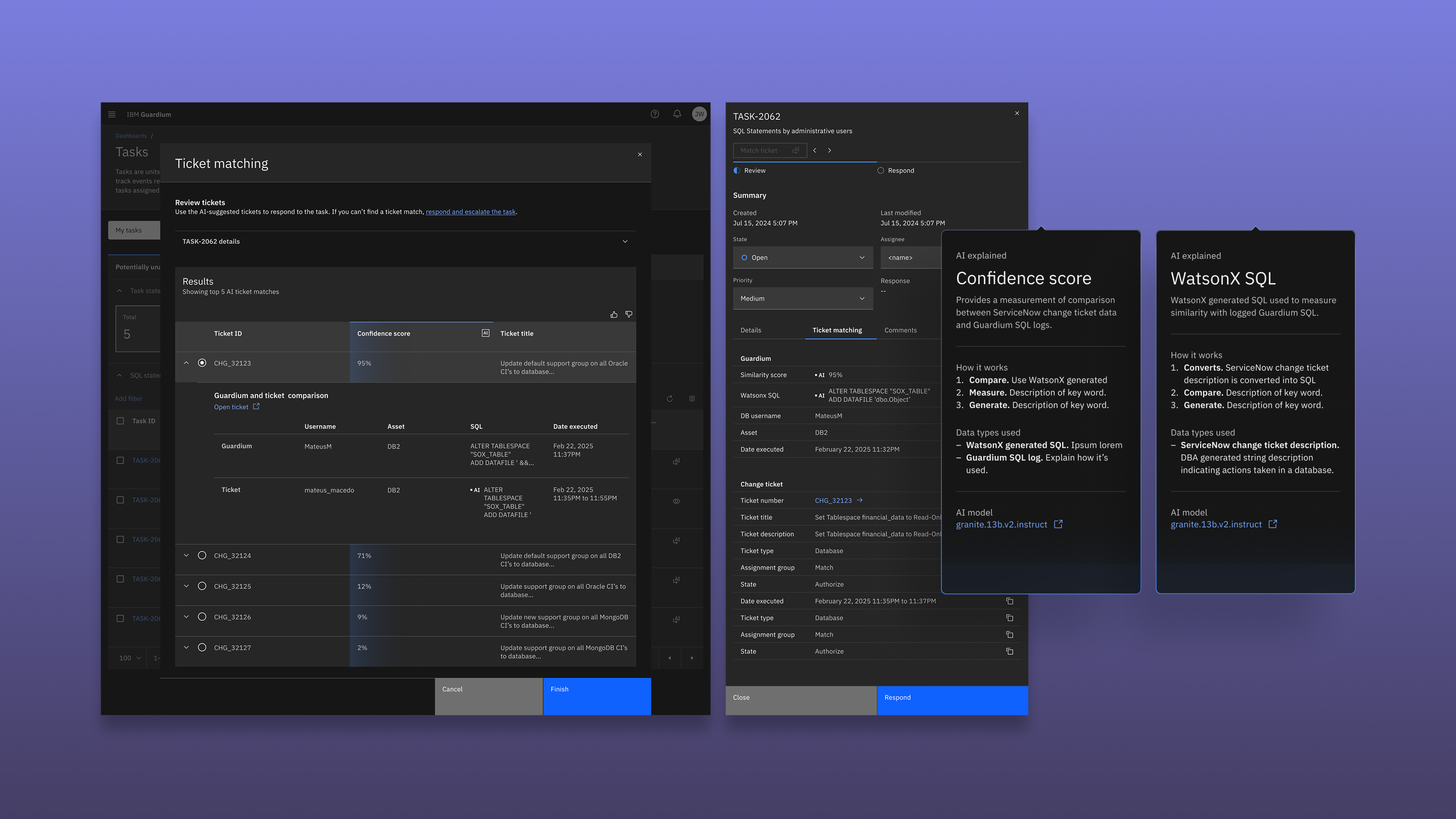
Automatically correlates database change logs with the correct ticket, eliminating manual cross-referencing.
Ranks and surfaces relevant matches with confidence scores to enable faster, high-confidence decisions.
Direct integration with ServiceNow and other ticketing systems removed copy-paste workflows and tool switching, enabling reconciliation within a single audit-ready interface.
Eliminates redundant steps while preserving compliance traceability and documentation integrity.
Because ticket comparison was the core of the experience, I explored four distinct design approaches, each presenting ticket match results and task metadata in different formats—from tabular layouts with metadata surfaced above the table to variations using a right-side panel to display ticket match insights or contextual metadata. Through SME and user feedback, the final design narrowed each ticket to high-signal data, retained a familiar tabular structure, and introduced sub-rows to enable direct comparison between ticket details and internal system logs for faster, more confident evaluation.
"This is the first I've seen that actually correlates logic to activity."
— U.S. Banking Customer
Final ticket comparison screen showcasing AI explainability tooltips and results sidepanel.
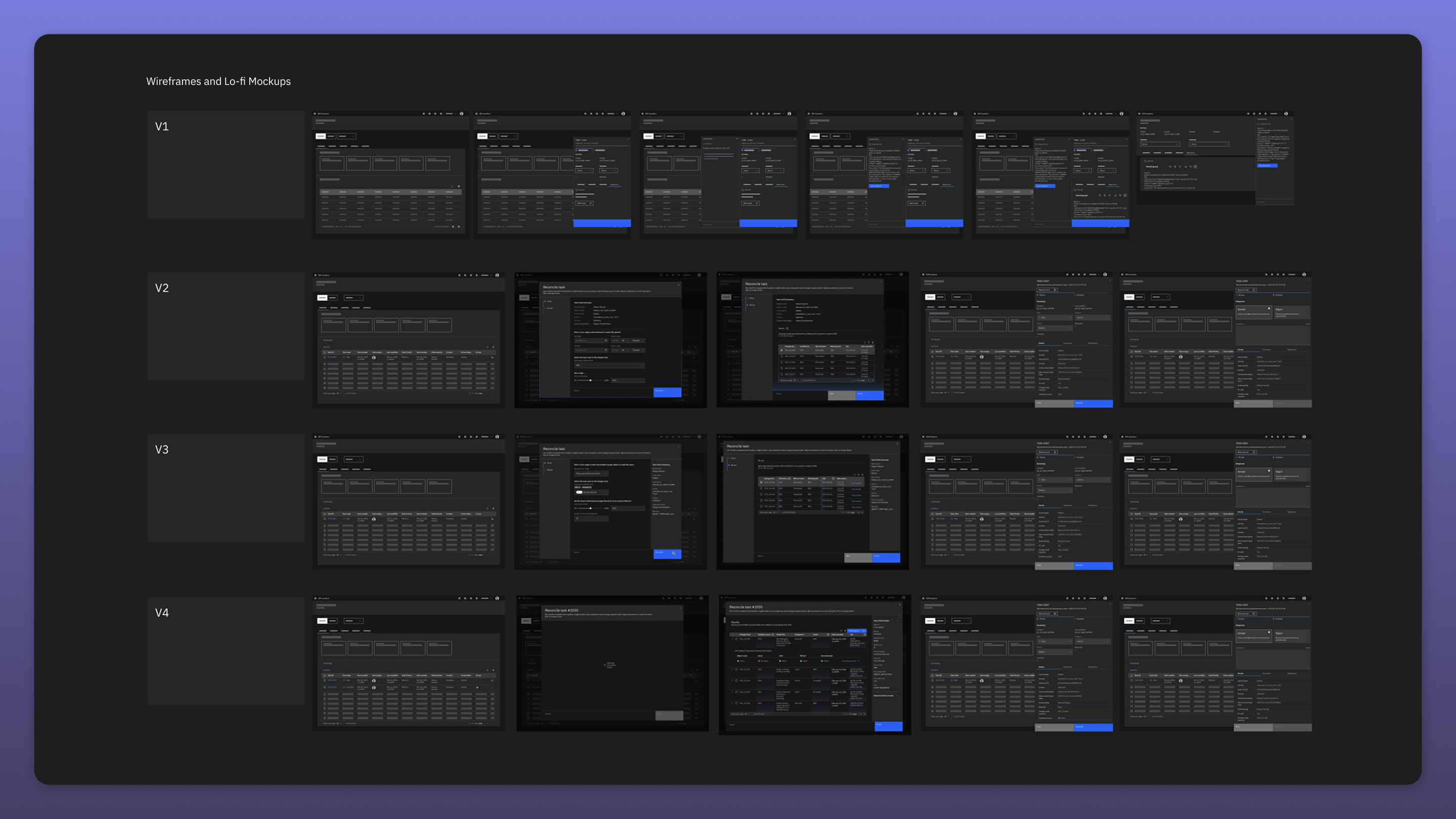
Exploration of four distinct design ideas for the ticket matching screen and flows.
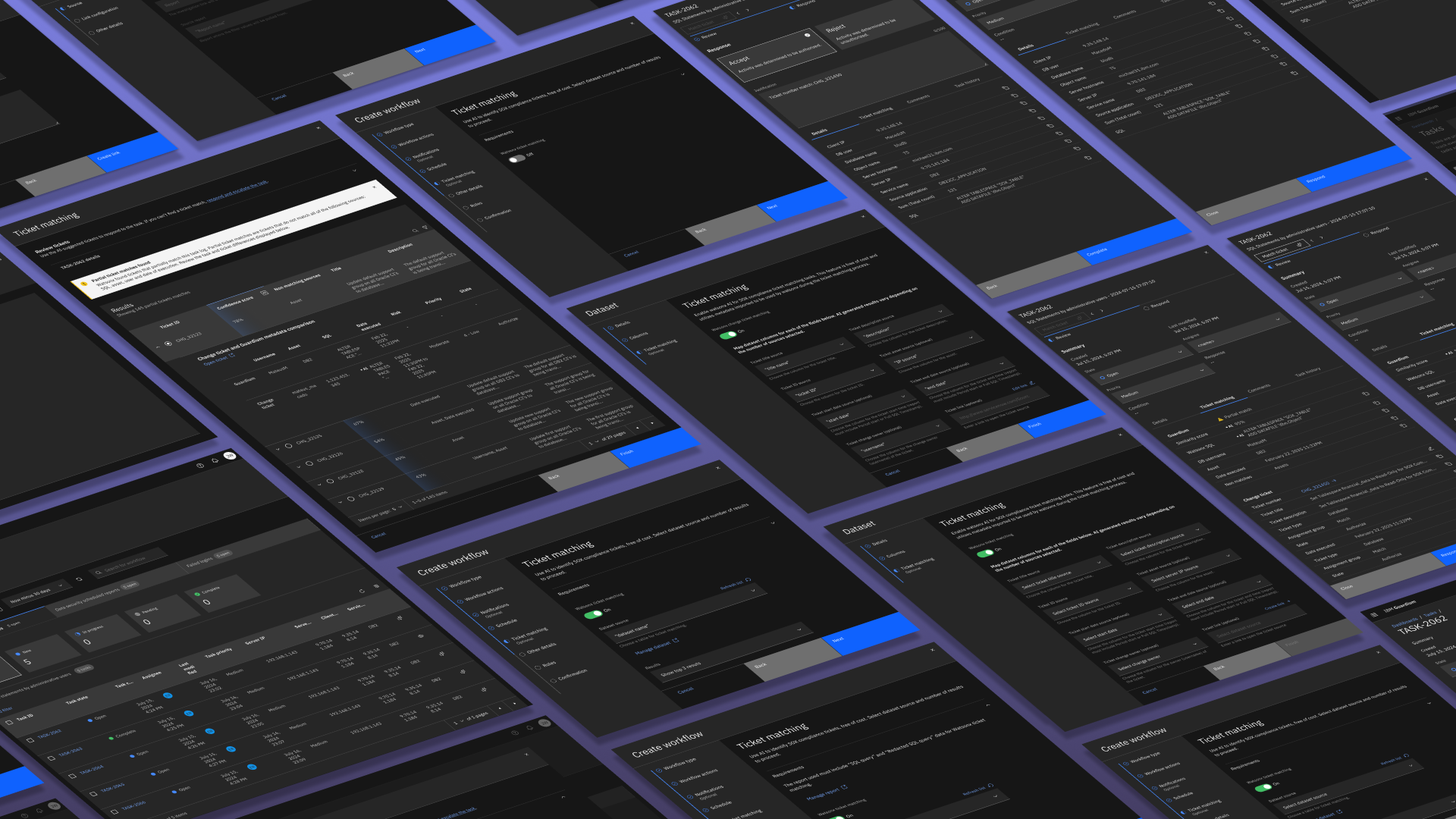
Various screens of the ticket reconciliation flow including configuration, workflow setup, integrations and various detail screens.
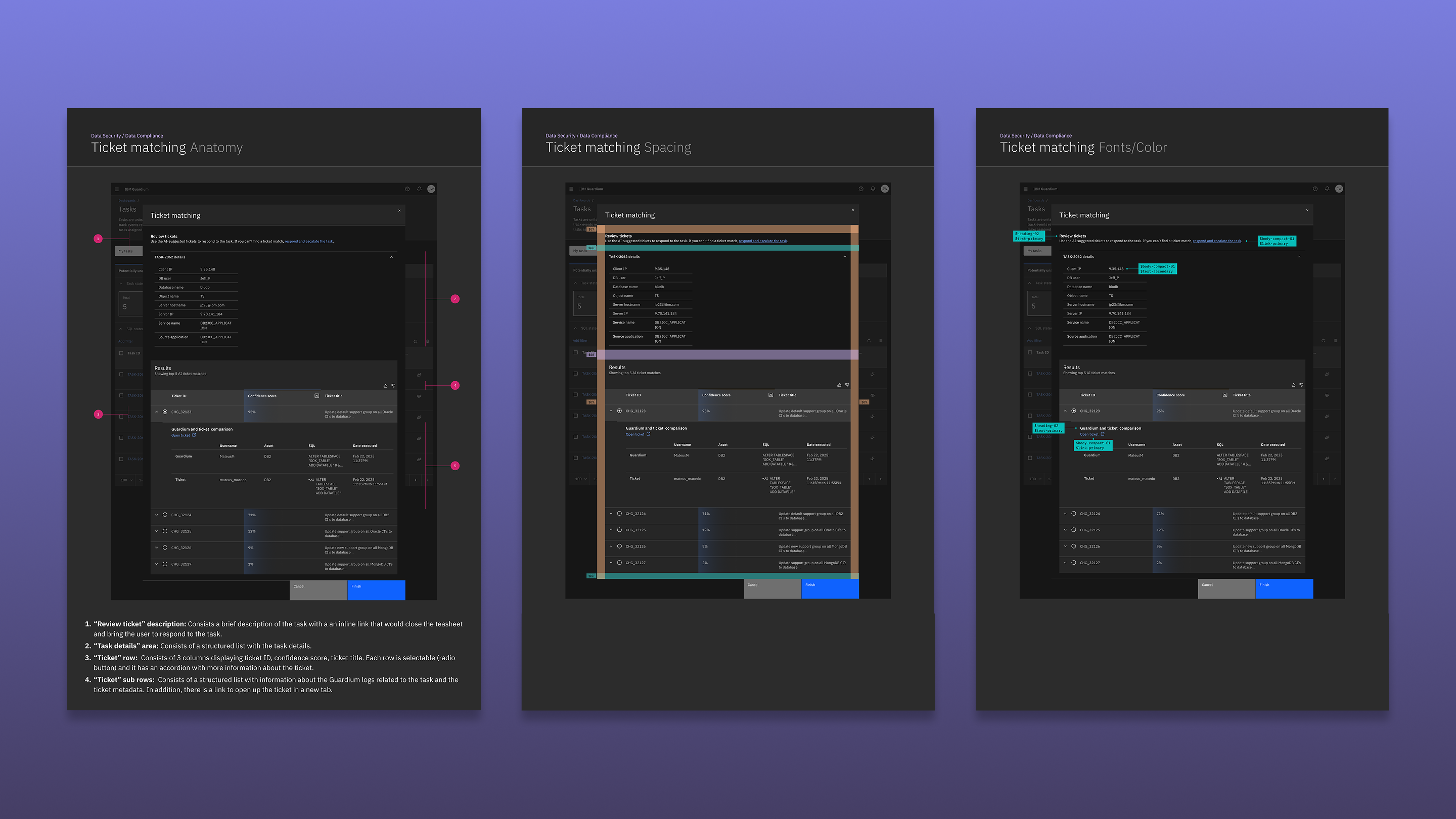
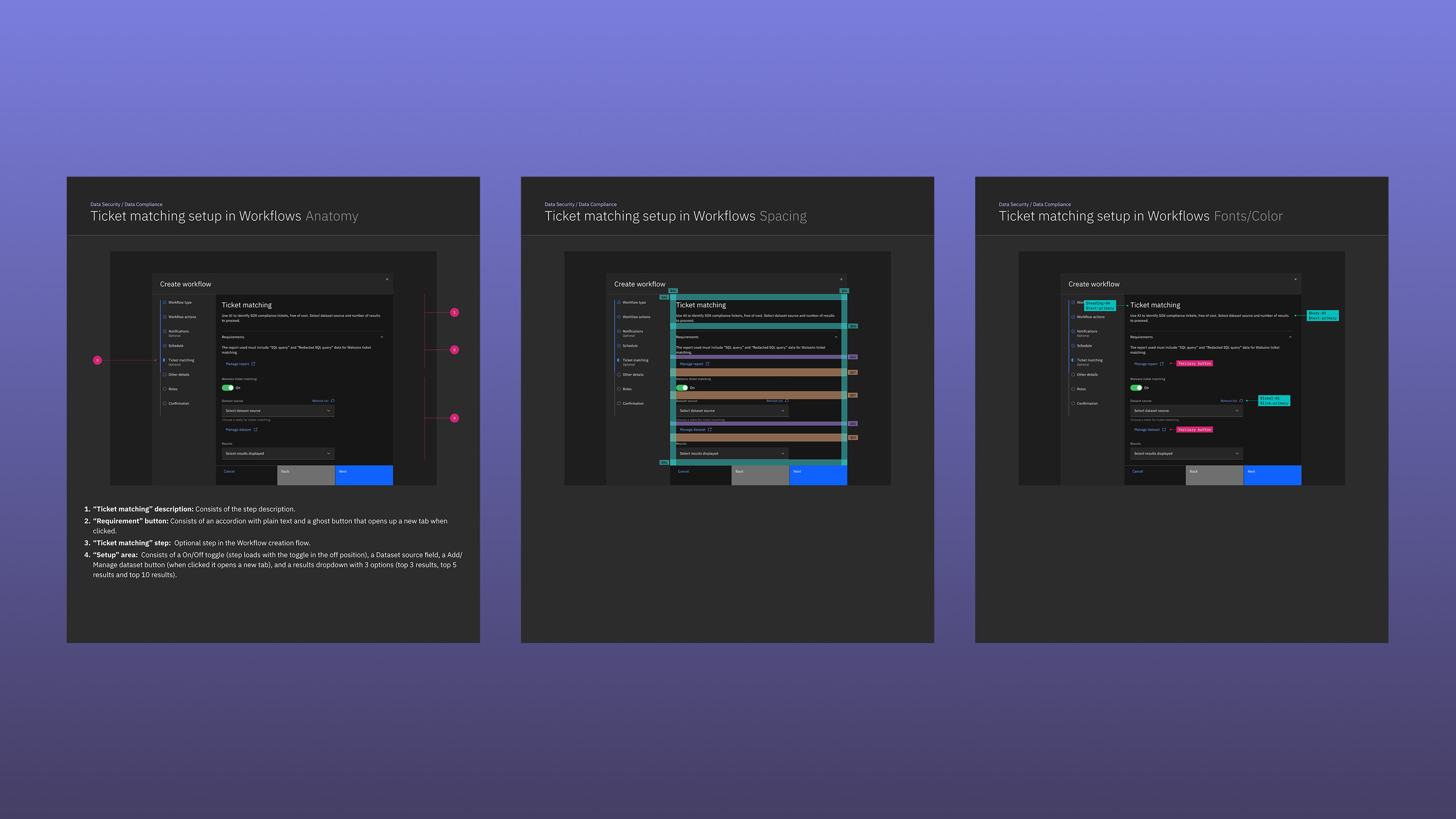
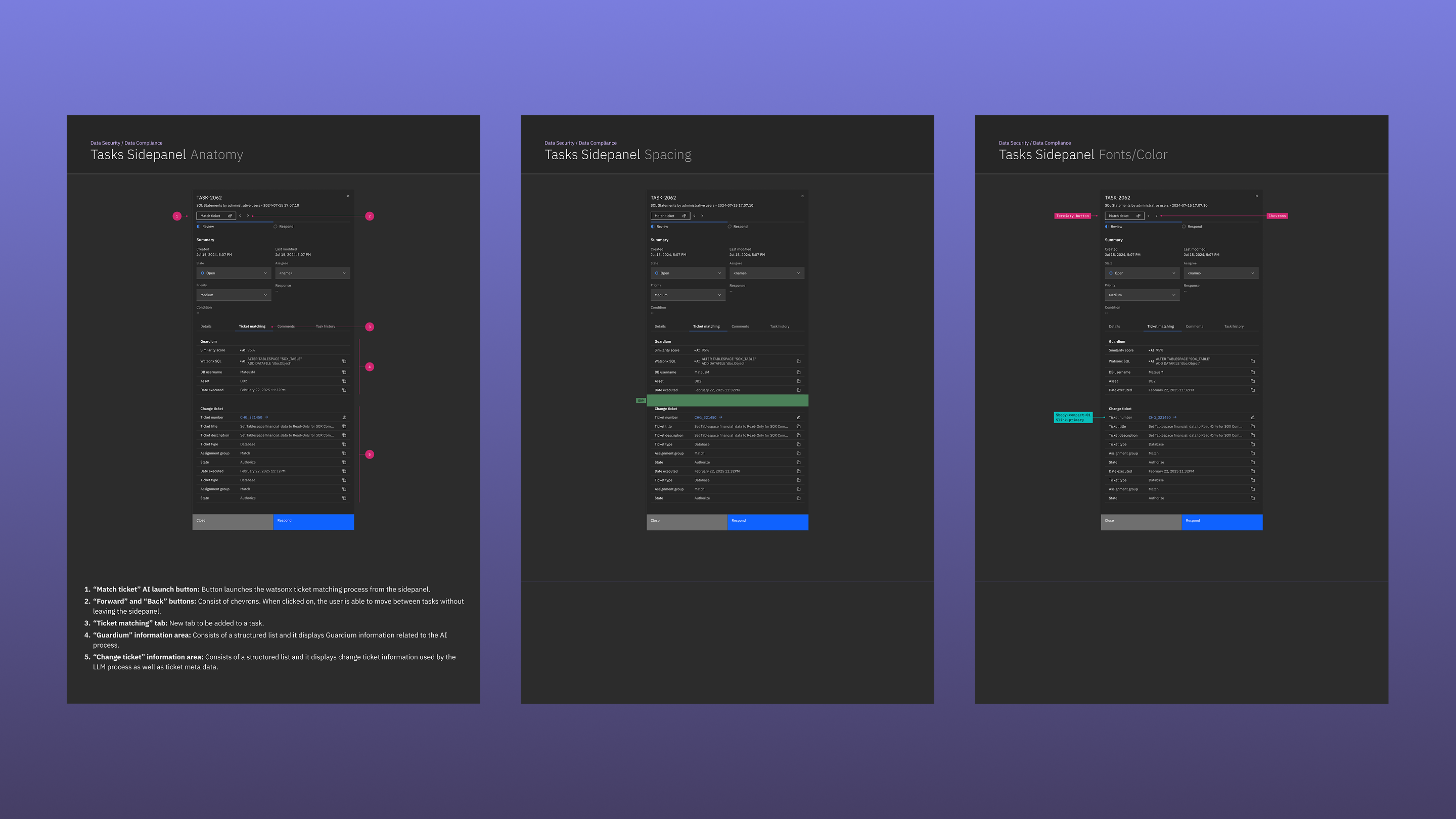
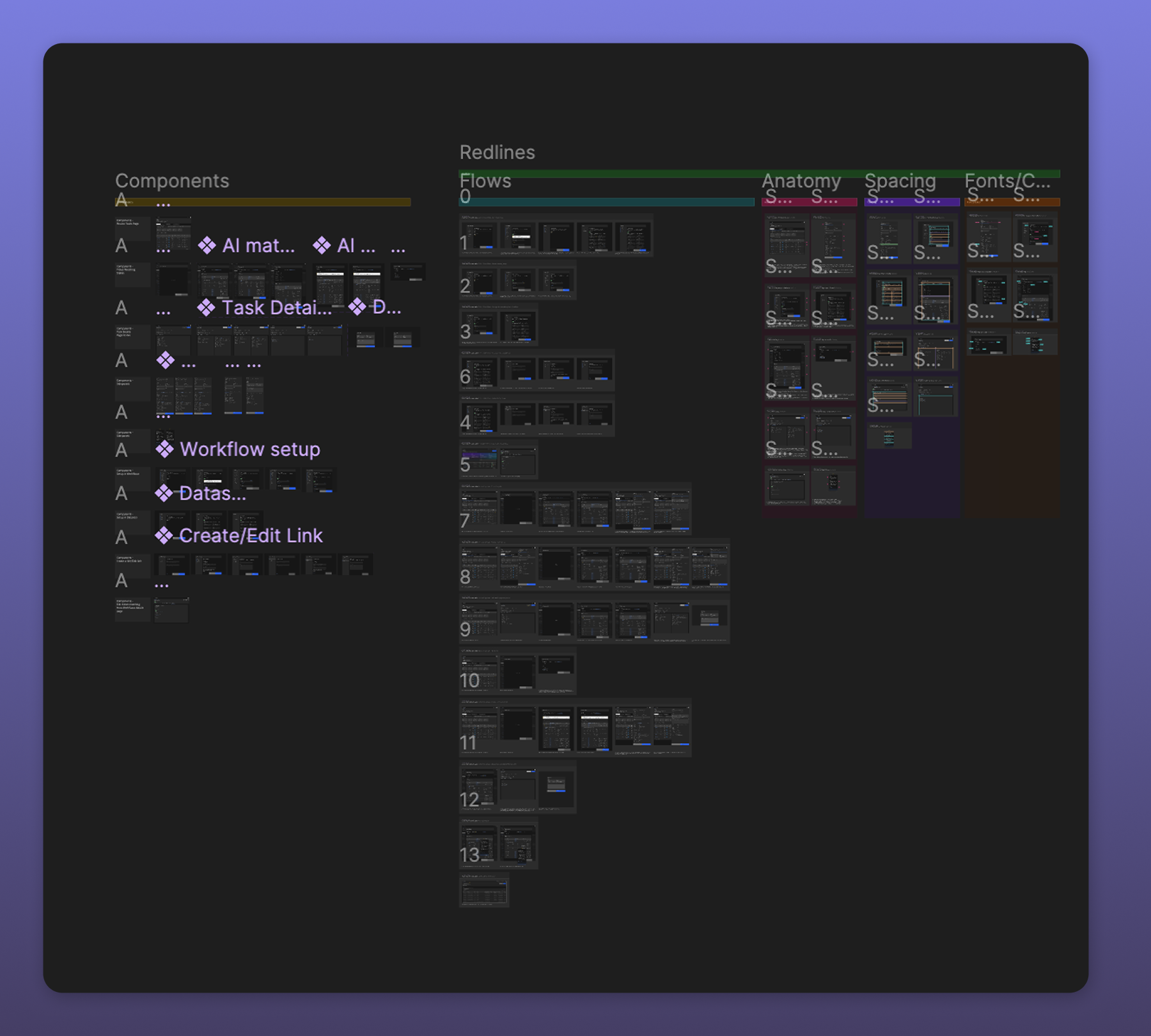
I designed the solution as a scalable, reusable component set aligned with the IBM Carbon Design System, providing detailed development guidance and a production-ready Figma handoff that enabled engineers to implement efficiently with minimal design follow-up.
The final experience focused on:
The images below show the dev-ready screen specifications including component logic, functionality, and design tokens.
Efficiency improvement
Ticket reconciliation time reduced to minutes
Manual steps eliminated
Delivered an AI-powered reconciliation feature that: